
What Are Polymers?
Polymers are large molecules made from repeating structural units called monomers. These molecules form long chains that give materials unique physical and chemical properties. Polymers can be natural (rubber, cellulose) or synthetic (plastics, resins, fibers).
Plastics are a type of synthetic polymer that can be molded or shaped when heated and then hardened into durable products.
Types of Plastics / Polymers
1. Thermoplastics
Soften when heated and harden when cooled
Can be reshaped and recycled
Examples: PET, PVC, PE, PP, ABS
Applications: Packaging, pipes, containers, automotive parts
2. Thermosetting Plastics
Harden permanently after curing
High heat and chemical resistance
Examples: Epoxy, Phenolic, Polyester resins
Applications: Electrical components, coatings, adhesives
3. Elastomers
Flexible and elastic materials
Can return to original shape after stretching
Examples: Rubber, Silicone, Polyurethane
Applications: Seals, gaskets, tires, medical devices
4. Bioplastics
Derived from renewable sources
Eco-friendly and biodegradable options
Examples: PLA, PHA
Applications: Sustainable packaging, disposable products
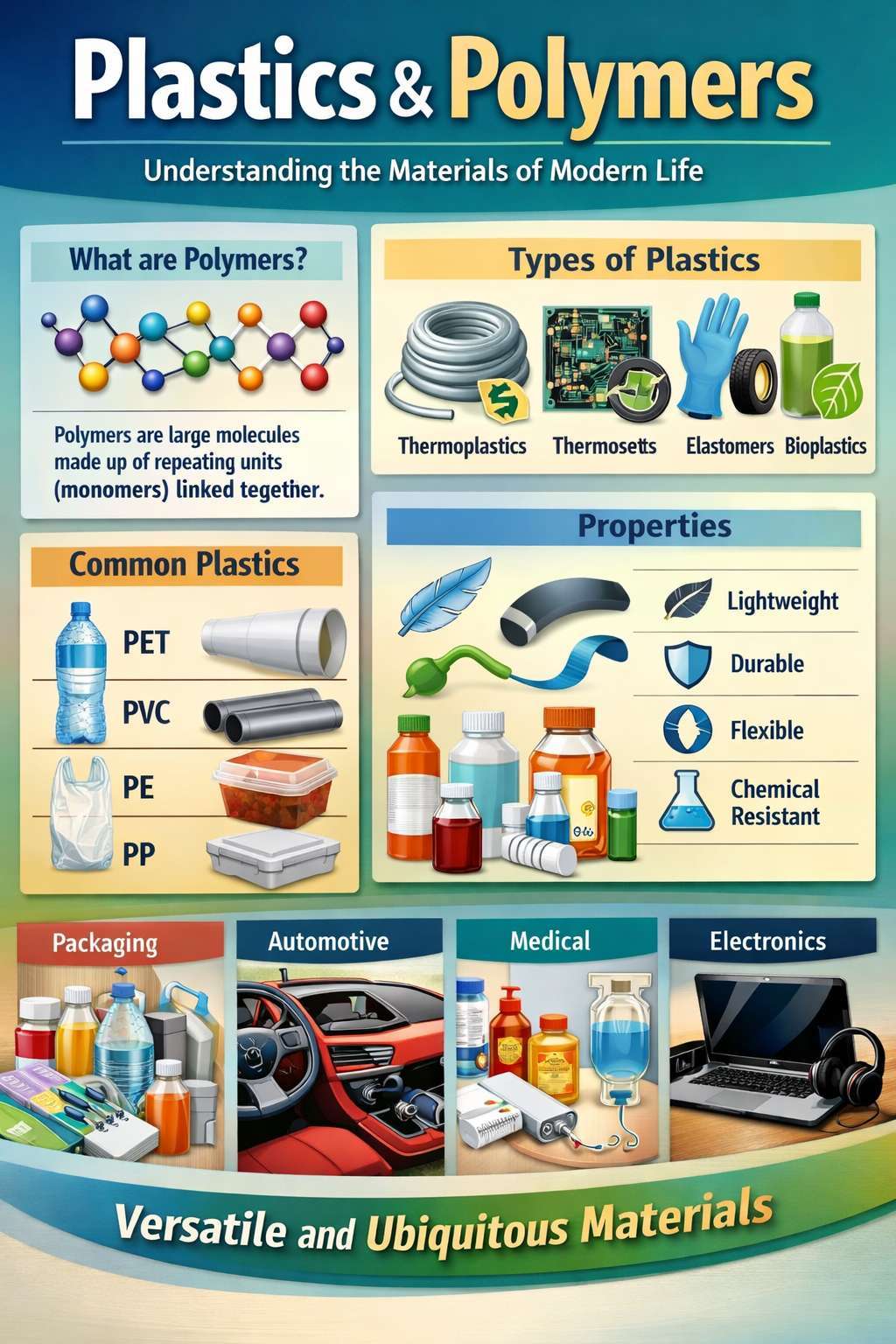
Common Plastics & Uses
| Plastic | Full Name | Common Applications |
|---|---|---|
| PET | Polyethylene Terephthalate | Bottles, food containers |
| PVC | Polyvinyl Chloride | Pipes, cables, flooring |
| PE | Polyethylene | Bags, films, containers |
| PP | Polypropylene | Packaging, automotive parts |
| PS | Polystyrene | Disposable cups, insulation |
Key Properties of Plastics & Polymers
Lightweight
High strength & durability
Excellent chemical resistance
Electrical insulation
Flexible or rigid (depending on type)
Cost-effective manufacturing
Corrosion resistant
Major Applications
Packaging
Bottles, containers, films, wraps
Lightweight and food-safe materials
Medical
Syringes, IV tubes, medical packaging
Sterile and chemically resistant materials
Electronics
Insulation, casings, connectors
Heat-resistant and electrically safe
Construction
Pipes, fittings, insulation panels
Long-lasting and weather-resistant
Automotive
Dashboards, bumpers, interior components
Weight reduction and fuel efficiency
Advantages of Plastics & Polymers
Design flexibility
Long service life
Easy processing and molding
Low maintenance
Wide range of performance options